Key Takeaways & Protocol Essentials
- A standardized scope review converts raw field observations into clear, audit-proof repair items.
- Every scope transition line must be verified against photographic evidence and structural boundary marks.
- Sequential phase gates prevent unverified assumptions from migrating into the finalized scope document.
Core Objectives of Scope Review
Field review operates as the quality control bridge between on-site damage assessment and final scope documentation. Rather than simply skimming through line items, an effective reviewer inspects each proposed task against photographic context, physical dimensions, and structural continuity.
When field technicians document site conditions without a standardized review framework, assumptions creep into the record. Clear review criteria ensure that each removal, prep work, and reinstallation step remains firmly anchored in objective field measurements and observable physical reality.
Four Sequential Review Stages
Confirm that initial field photos, dimensional sketches, and environmental logs match the reported damage boundaries before examining individual item calculations.
Recalculate surface square footage, linear footage of trim, and opening deductions to eliminate overlaps between adjacent work zones.
Audit material descriptions, labor activity codes, and specialty trade overlaps to maintain defensible, accurate scope definitions.
Evidence Verification & Gatekeeping
Reviewing a repair scope requires establishing clear gates where documentation must meet definitive evidentiary thresholds. If a photo fails to capture the material transition point or the exact boundary of moisture migration, the reviewer pauses the scope progression rather than filling gaps with speculation.
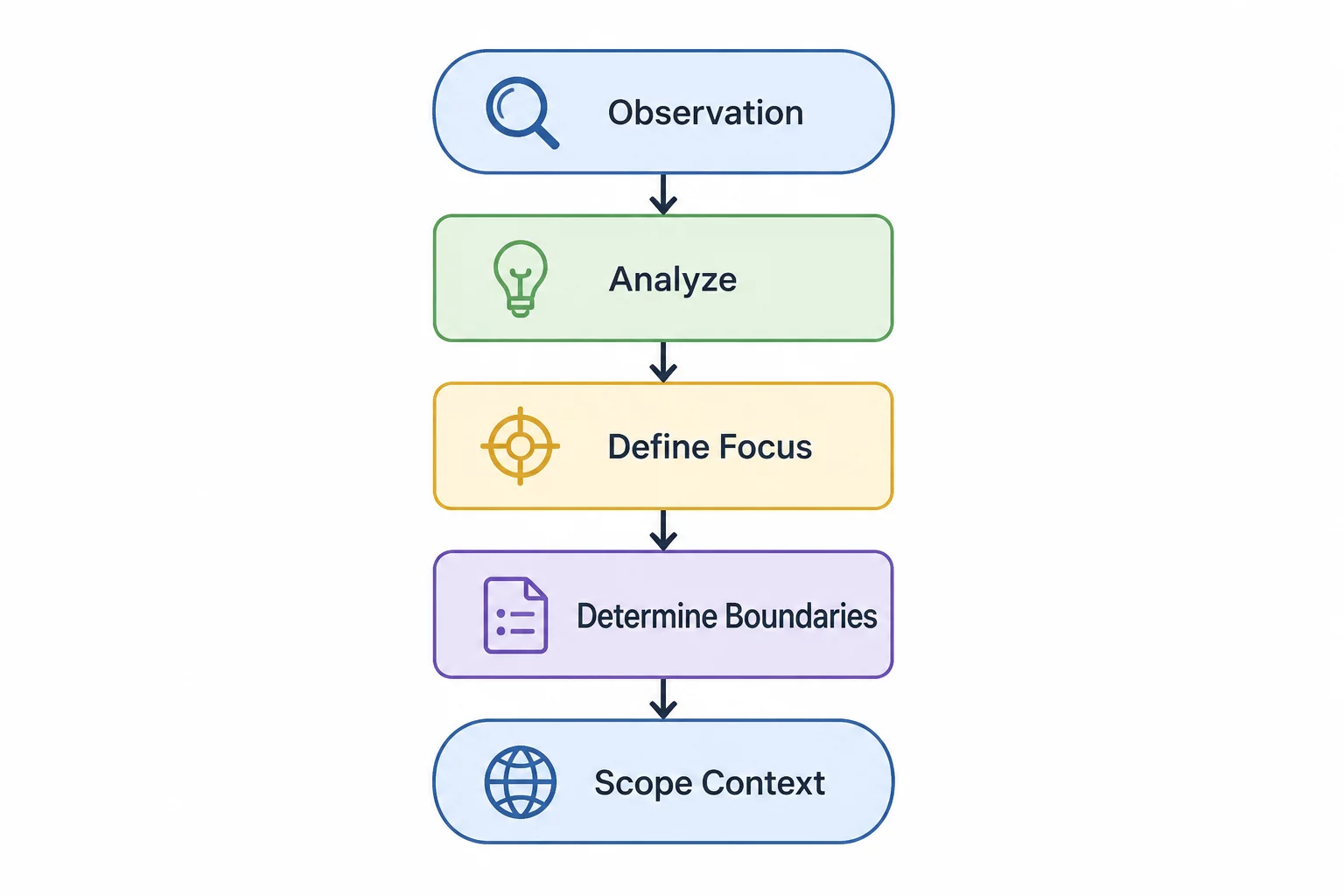
“A well-structured review process treats documentation as an unbroken chain: observation leads to measurement, measurement defines boundaries, and boundaries justify every individual line item.”
Documenting why an item is excluded is just as critical as documenting why it is included. Reviewers who record explicit reasoning for boundary stops build resilient scope files that withstand deep technical audits and post-inspection inquiries.
Review Protocol Matrix
| Review Phase | Primary Verification Objective | Mandatory Evidence Deliverable |
|---|---|---|
| Phase 1: Intake Audit | Cross-reference initial site overview photos with room sketch labels | Verified photo-to-sketch boundary alignment sheet |
| Phase 2: Dimension Check | Verify total wall, ceiling, and flooring calculations against field notes | Quantity reconciliation log with opening deductions |
| Phase 3: Line-Item Gate | Confirm trade operation descriptions align with verified physical damage | Defensible line-item narrative with linked photo tags |

Field Inquiries & Observations
Submit a Field Note or Feedback
Share your site observation insights or questions regarding this methodology.