Key Takeaways
- Every scope statement must trace back to a physical observation and forward to an estimate line item.
- Record the boundary logic explicitly — the next reviewer cannot verify what was never written.
- Attach the evidence that would falsify the decision, not only the evidence that supports it.
Visibility vs Extent
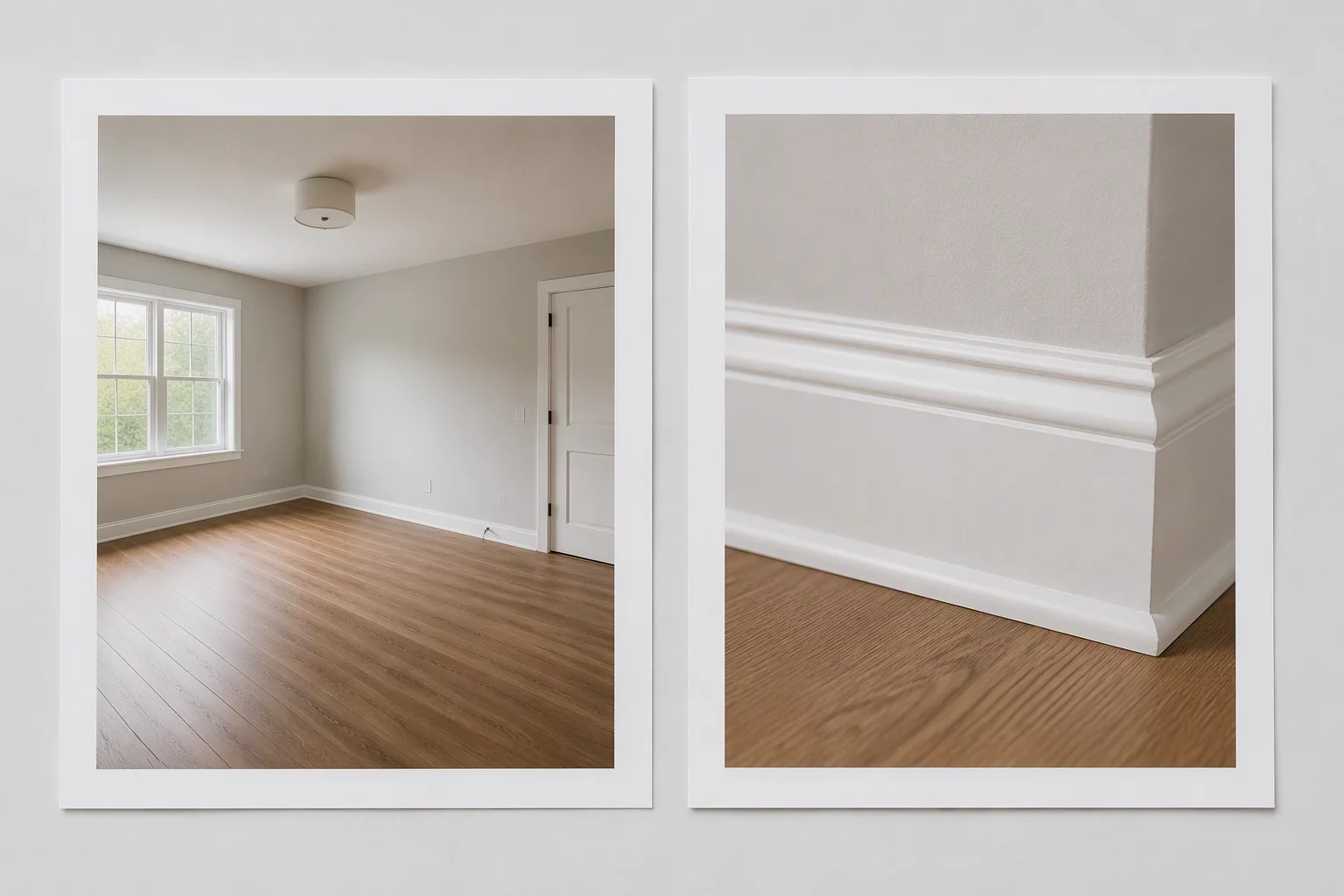
Damage and repair extent are different questions. A macro shot of swollen baseboard answers 'is something damaged here?' but cannot answer 'how far does the repair go?' Extent lives in the relationship between the damaged spot and the surrounding intact material — and that relationship only exists in wider frames.
Reviewers see this failure constantly: a photo set with eight beautiful close-ups and no context shot. Every close-up is technically accurate, and the scope still cannot be reconstructed, because nothing in the set marks where damaged material meets sound material.
The Four-Frame Extent Set
The whole wall or elevation from standing distance. Places the damage in the room so a reviewer can orient every later shot.
A mid-range shot centered on the transition between damaged and sound material — the single most important frame for scope extent.
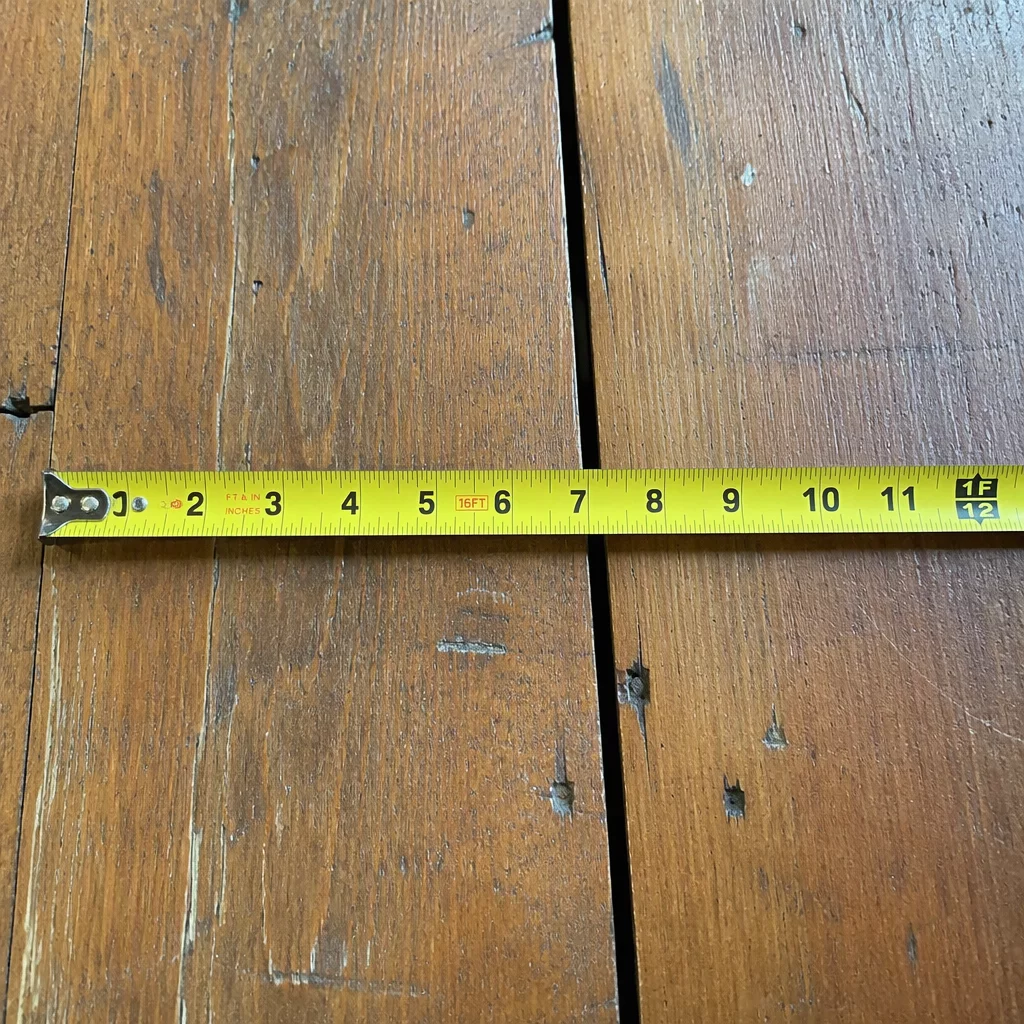
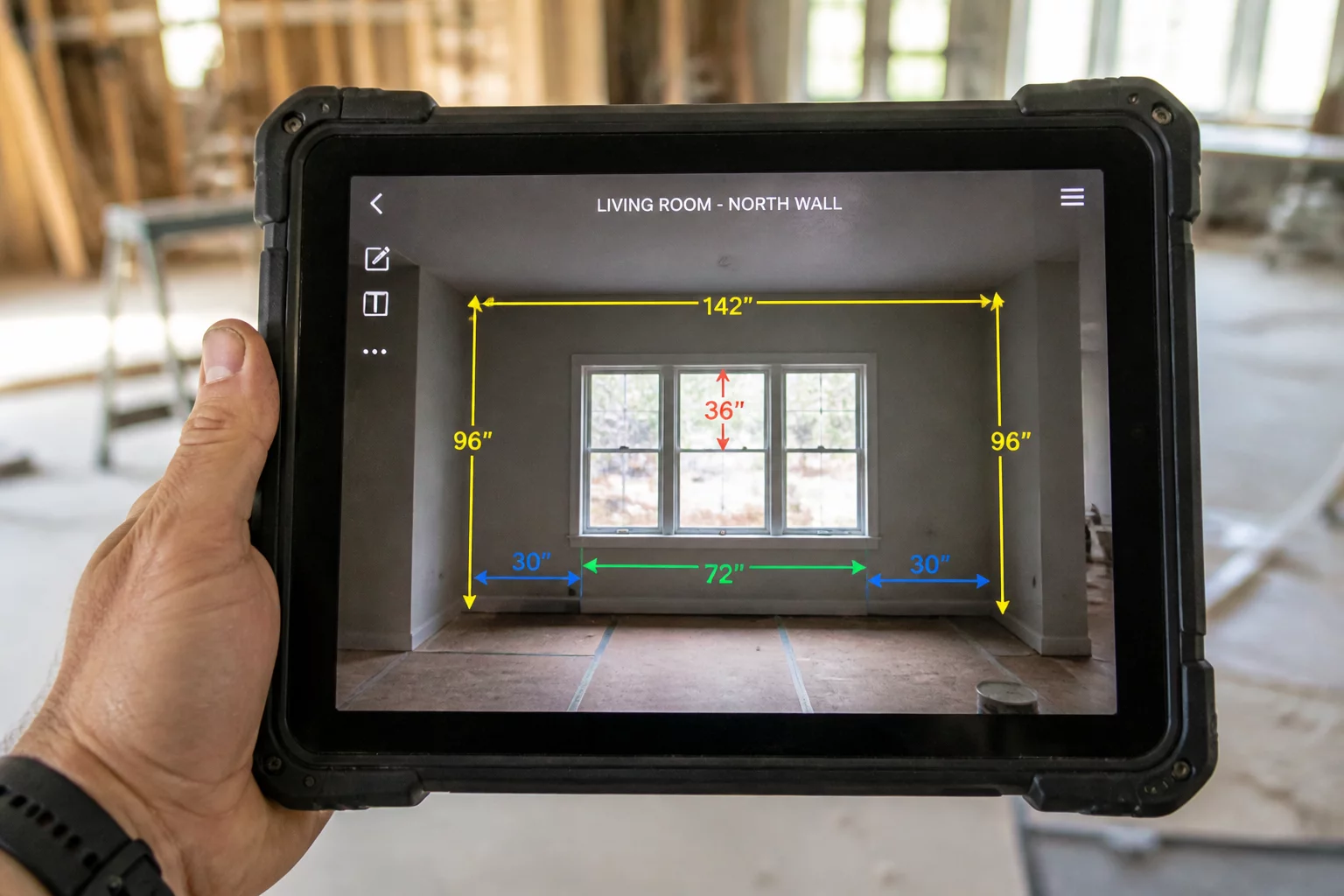
A tape, ruler, or datum marker inside the frame against the stop line. Converts 'somewhere around here' into a reproducible dimension.
The close-up that proves material condition at the boundary — texture, swelling, delamination — last, not first.
Annotating the Stop Line
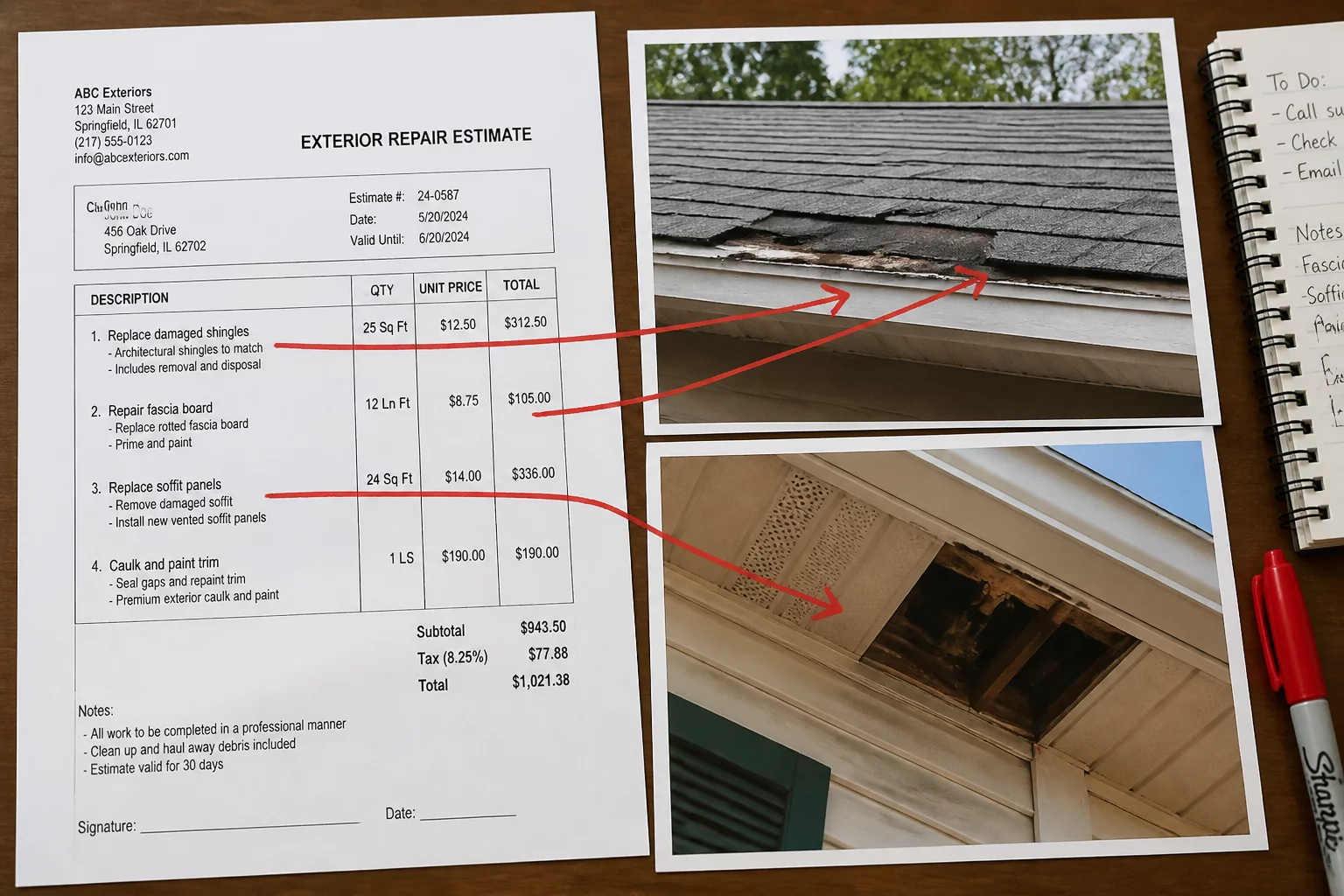
Photos alone rarely carry the reasoning. An arrow, a marked tape position, or a caption that says 'moisture readings normalize at this joint' turns an image into evidence. Without it, the next reviewer guesses where the measurement was taken — and guesses wrong often enough to matter.
The fieldbook rule is simple: every extent claim must be traceable to a frame where the stop line is visible and a reference that makes it measurable.
A damage photo proves condition. Only a boundary photo proves extent.
Extent Evidence Checklist
| Photo Purpose | What It Proves | Missing-Photo Risk |
|---|---|---|
| Context frame | Location of damage in the room | Reviewer cannot place the defect |
| Boundary frame | Where damaged meets sound material | Repair extent becomes opinion |
| Measurement frame | Reproducible stop dimension | Quantity disputes on removal/replace items |