Key Takeaways & Protocol Essentials
- Surface dryness can conceal elevated core moisture within insulation batting and bottom plate framing.
- Accurate repair scope documentation requires linking thermal imaging spans directly with pin-probe readings.
- Transparent estimate scope review prevents under-scoping of concealed framing sanitization and drywall extraction.
Discovery & Thermal Boundary Mapping
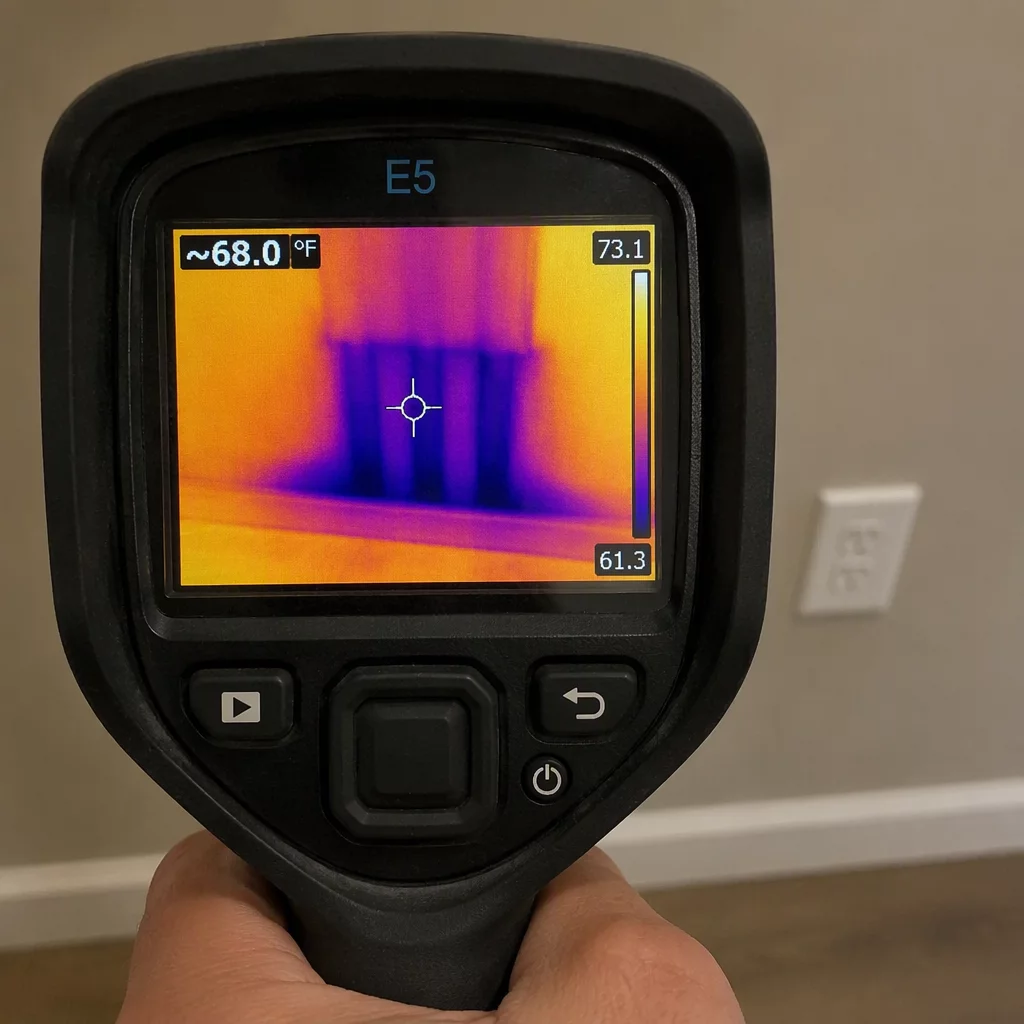
During routine inspection of an interior partition wall adjacent to a primary supply pipe, visual inspection revealed no obvious bubbling, staining, or finish peeling. However, preliminary thermal imaging indicated a pronounced temperature delta stretching 4.5 feet across the lower drywall segment. Translating this physical anomaly into reliable repair scope documentation demanded immediate validation beyond non-destructive scanning.
Pin-type moisture meters confirmed elevated moisture content above 28% in the gypsum core and base framing, despite the outer latex paint coat appearing pristine. In our estimate scope review workflow, establishing this exact perimeter prevented arbitrary tear-out while justifying the necessary linear footage of flood-cut removal.
Crucial Field Observations & Findings
High-contrast thermal imaging identified a 54-inch horizontal temperature differential along the baseboard plane.
Pin readings recorded 29.4% moisture at the baseplate compared to a dry baseline of 9.2% on adjoining studs.
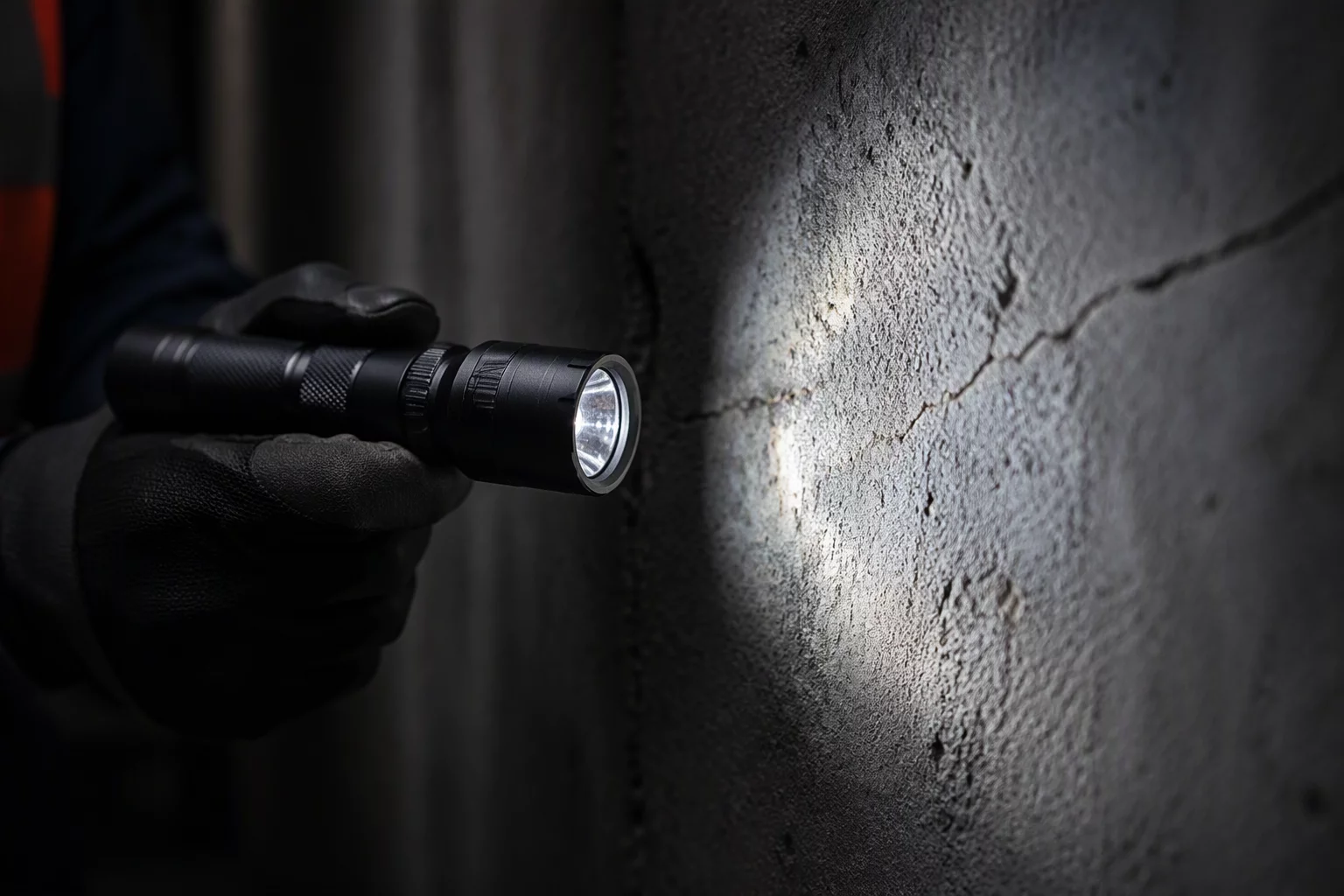
Borescope cavity inspection proved closed-cell vapor barrier trapping liquid moisture behind kraft-faced insulation.
Scope Line Trace & Technical Justification
Aligning inspection findings with line items requires providing defensible narrative context. When building the estimate, capturing why drywall removal extends above standard flood-cut heights hinges on insulation wicking data. Establishing explicit Xactimate scope context clarifies the transition between standard water extraction and necessary structural drying protocols.
Concealed moisture cannot be estimated on surface appearance alone; thermal boundary proof and invasive cavity readings form the backbone of audit-ready scope validation.
By documenting the exact cavity depth and framing wetness in the field notebook, the scope item for containment, controlled 2-foot drywall cut, and framing microbial treatment was clearly supported. This rigorous trail prevented scope friction and ensured complete alignment across reviewers.
Quantitative Scope & Material Diagnostics
| Diagnostic Check | Field Measurement | Scope Action Justification |
|---|---|---|
| Thermal Imaging Cold Spot | 54 in. x 18 in. anomaly | Establishes initial non-invasive inspection zone |
| Gypsum Pin Resistance | 28.6% - 31.2% WME | Mandates flood-cut drywall removal at 24 in. height |
| Stud Cavity Borescope | Saturated fiberglass batt | Justifies insulation tear-out & framing dry-down |
Field Inquiries & Observations
Eleanor Vance
Field Observation Lead • 09/20/2026
The thorough line-item trace and photographic cross-referencing provided absolute clarity on the scope. It completely eliminated ambiguity during our appraisal review.
Marcus Reed
Senior Audit Specialist • 09/22/2026
Thank you, Eleanor! We make sure every site audit record directly links high-resolution capture data to exact scope items for complete audit integrity.
Submit a Field Note or Feedback
Share your site observation insights or questions regarding this methodology.