Key Takeaways & Protocol Essentials
- Distinct architectural profiles (such as 5-1/4 inch colonial vs flat craftsman baseboards) require exact dimensional recording rather than generic per-foot allowances.
- Continuity breaks at room transitions dictate whether whole-perimeter or partial-wall replacement is justified under repair scope documentation standards.
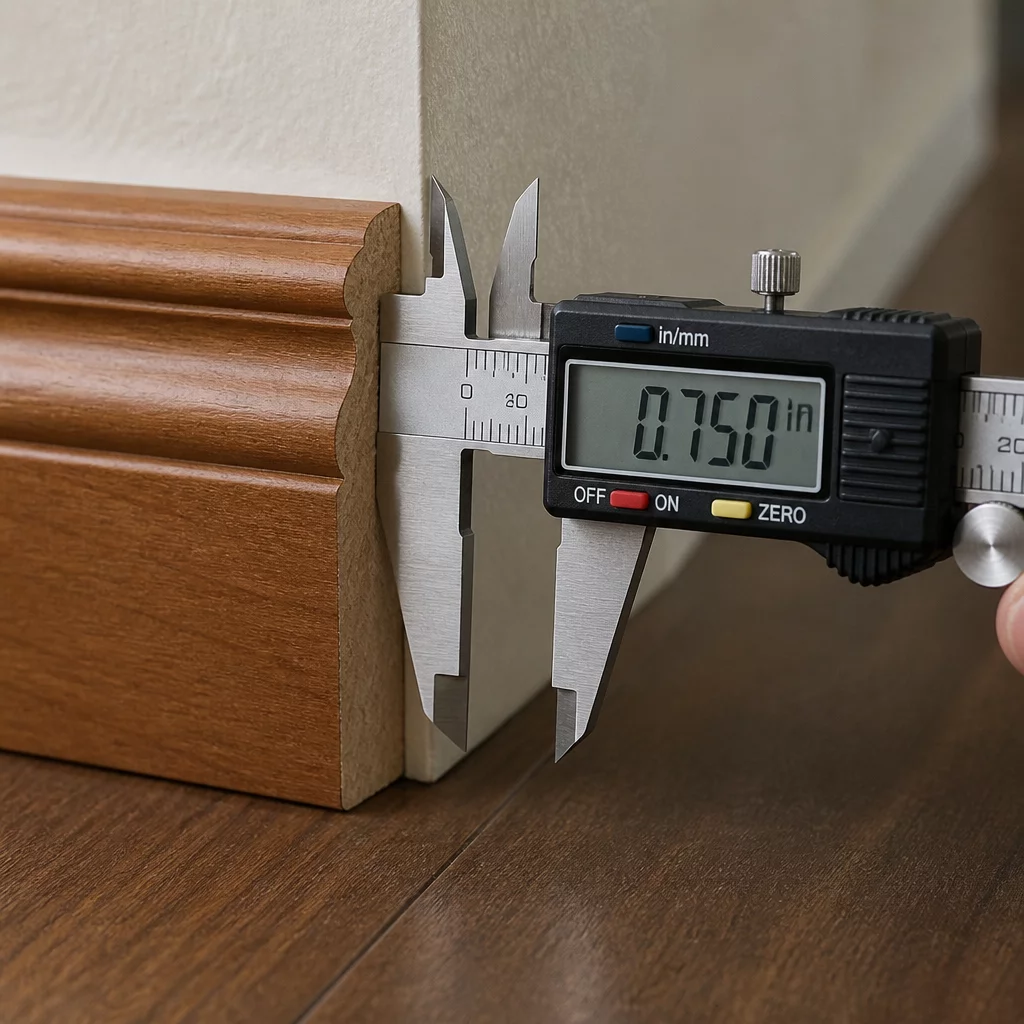
- Clear cross-sectional photography with digital calipers prevents estimate scope review friction during multi-room remediation audits.
Field Observation & Physical Profile Discovery
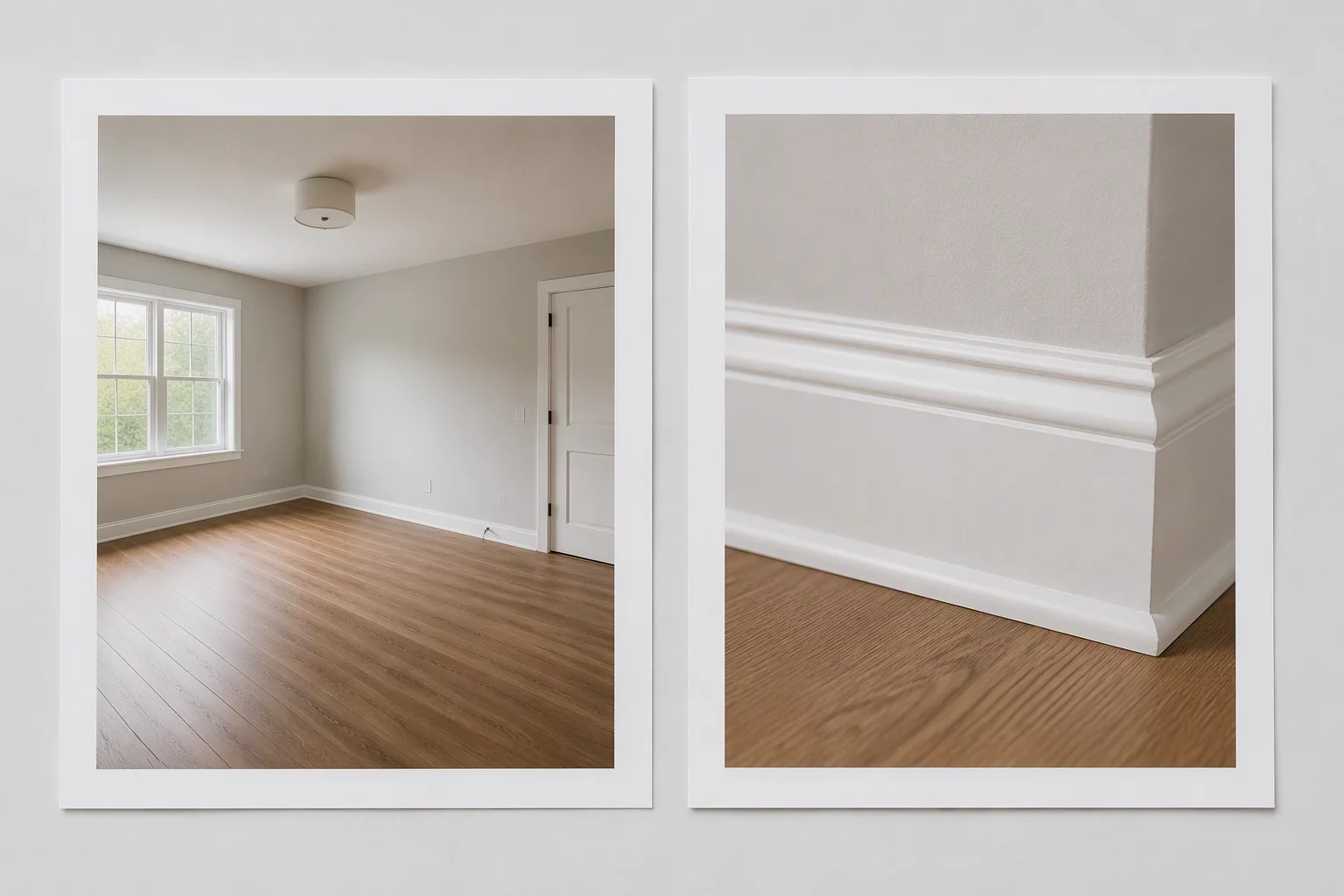
During a multi-room residential water remediation inspection, scope documentation revealed a critical discrepancy between standard line items and actual installed millwork. The affected hallway and adjoining formal dining room featured custom 5-1/4 inch two-piece colonial stepped baseboards with integrated shoe moulding. However, the initial draft estimate simply recorded a standard 3-1/4 inch single-piece pine trim line item across all affected linear perimeters.
When baseboards run continuously across open floor plans without physical doorway thresholds, selective removal of damaged lower sections creates unmatchable joint seams. Field inspection captured precise cross-sectional measurements using digital calipers, proving that current stock profiles differed significantly in depth and step radius from the legacy profile installed twenty years prior.
Evidence Parameters & Measurement Breakdown
Caliper verification indicated an 11/16-inch base thickness and a 1-1/8-inch top relief, which exceeded standard 9/16-inch contemporary off-the-shelf moulding specs.
An uninterrupted 84-linear-foot perimeter traversed the dining alcove and grand foyer without intermediate casing or natural transition stops.
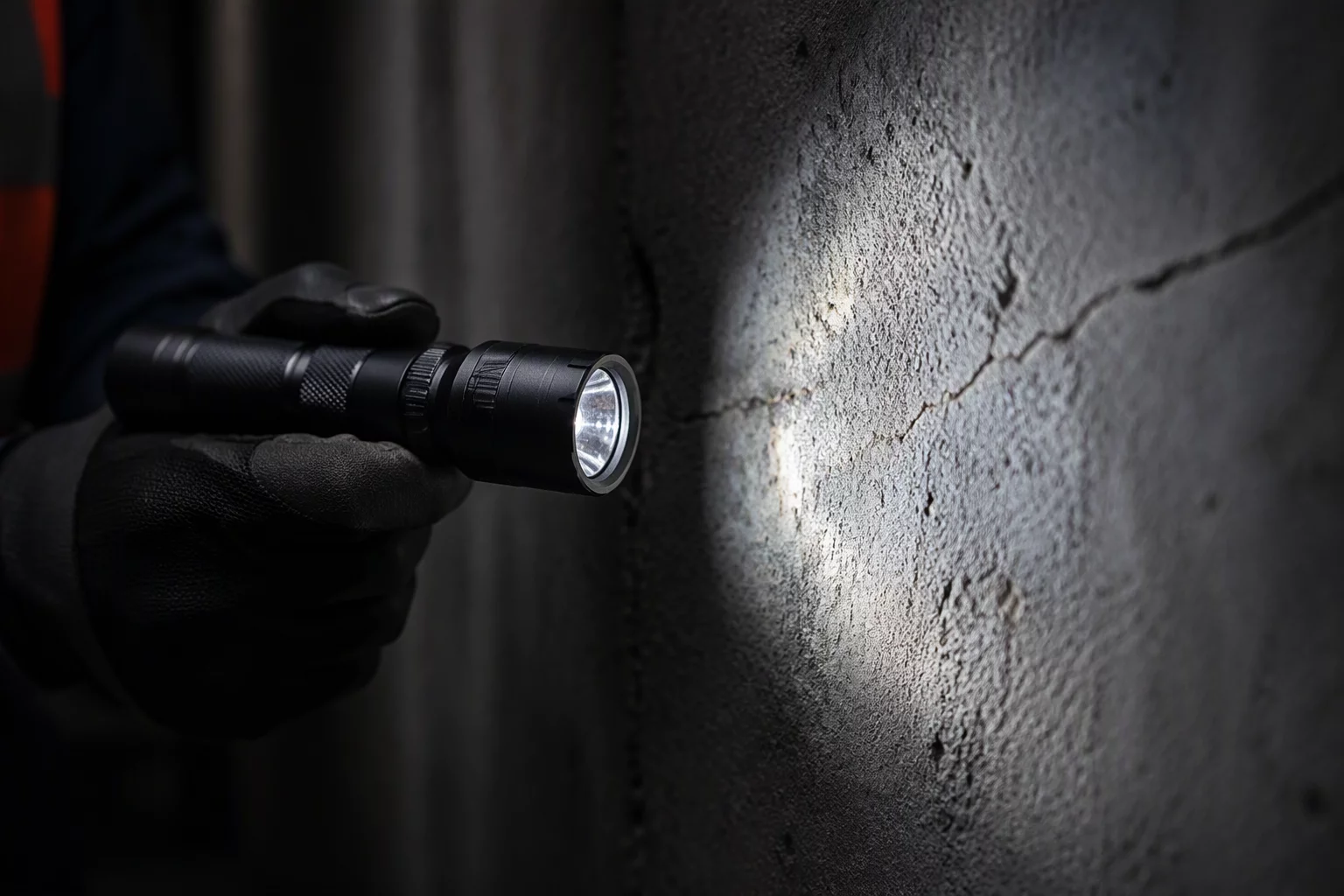
Moisture penetration compromised the underlying drywall nailing edge, requiring partial backing re-framing prior to finishing nail installation.
Technical Analysis & Xactimate Scope Context
Aligning field evidence with repair scope documentation requires linking physical measurements directly to corresponding line-item assemblies. Within Xactimate scope context, selecting a generic finish carpentry line item without accounting for millwork fabrication or continuous room run boundaries leads to under-scoping and mid-project supplement delays.
"A visual mismatch at an open casing corner undermines the entire scope integrity. Millwork must either match the existing run seamlessly or be scoped for full continuous perimeter reset."
When evaluating estimate scope review parameters, adjusters and estimators must examine whether adjacent continuous trim can be retained or if profile obsolescence necessitates comprehensive room replacement. In this case, documenting the unavailable knife profile through macro cross-section photography provided indisputable evidence for an upgraded custom run allowance.
Line-Item Specification Comparison
| Field Observation | Generic Initial Scope | Verified ScopeTrace Standard |
|---|---|---|
| 5-1/4" Two-Piece Custom Colonial | FNC BAS 3-1/4" Single Pine | FNC BASC 5-1/4" Stepped Profile + Shoe |
| 84 LF Continuous Open Perimeter | 24 LF Isolated Wet Wall Only | 84 LF Complete Continuous Transition Run |
| Two-Coat Semi-Gloss Enamel Finish | Single Coat Prime & Paint | Prep, Prime, Caulk, & 2-Coat Finish Paint |
Field Inquiries & Observations
No field comments submitted yet. Be the first to share your observation.
Submit a Field Note or Feedback
Share your site observation insights or questions regarding this methodology.