Key Takeaways & Protocol Essentials
- Post-review discrepancy logging systematically captures root causes of scope amendments rather than treating them as isolated, one-off corrections.
- Bi-weekly calibration sessions between field inspectors and estimating staff reduce duplicate site visits and revision turnarounds by over 35%.
- Standardized tag libraries and structured field notes create repeatable historical baselines for future estimating accuracy.
Establishing an Iterative Review Architecture
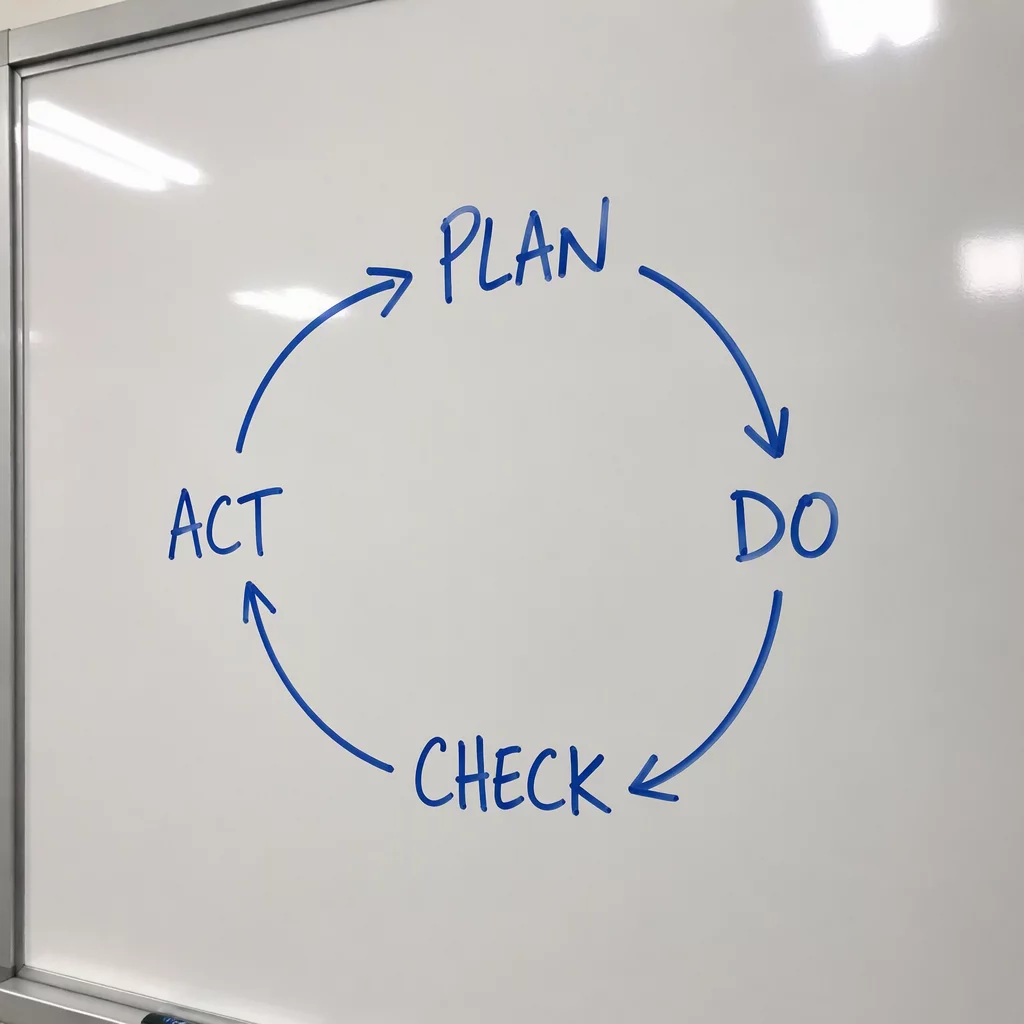
Scoping errors rarely stem from a lack of technical knowledge; they emerge from broken communication loops between physical inspections and desk reviews. An effective continuous improvement cycle treats every revision request not as an administrative hurdle, but as diagnostic evidence. When an estimator questions a boundary transition or requests supplementary photos for a subfloor assembly, that inquiry points directly to a missing verification step in the initial site routine.
To convert these insights into lasting operational improvements, documentation teams must establish clear feedback channels. By cataloging the exact reasons why scope items were challenged or adjusted during audit, field technicians learn which physical details demand closer photo macros, detailed dimension tags, or cross-sectional notes. This structured feedback loop turns isolated inspection data into an evolving standard of practice.
Core Pillars of the Quality Improvement Loop
Every revision between initial field notes and final approved line items is coded with category tags identifying the exact ambiguity driver.
Field technicians and scope auditors review high-frequency variance patterns bi-weekly to refine on-site capture protocols.
Discovered scoping anomalies are converted into standardized visual field guides and updated documentation checklists.
Closing the Gap Between Site Capture and Desk Scoping
When field personnel complete an inspection, the raw observations undergo interpretation at the estimating desk. Without a standardized cycle of feedback, small discrepancies compound into major scope delays. For instance, a missing photo of a ceiling transition in an adjacent hallway might cause an estimator to guess whether continuity exists, leading to either under-scoping or unnecessary replacement line items.
“Continuous improvement is not an annual audit; it is a live feedback mechanism that transforms everyday scope questions into standardized field protocols.”
Implementing a real-time discrepancy dashboard ensures that recurring questions about specific materials, demolition boundaries, or height measurements are flagged instantly. By reviewing these flags during team debriefs, organizations build an institutional memory that eliminates repetitive scope omissions and ensures every estimate is anchored by indisputable evidence.
Audit Calibration & Performance Metrics
| Audit Phase | Key Performance Indicator | Actionable Protocol Outcome |
|---|---|---|
| Post-Inspection Audit | Missing Context Rate (< 4%) | Immediate supplementary photo checklist trigger |
| Desk Scope Assembly | Line-Item Dispute Variance (< 2.5%) | Field note cross-reference validation before signoff |
| Quarterly Retrospective | Repeated Ambiguity Recurrence (0%) | Revision of baseline SOP and documentation handbook |
Field Inquiries & Observations
Submit a Field Note or Feedback
Share your site observation insights or questions regarding this methodology.