Key Takeaways
- Every scope statement must trace back to a physical observation and forward to an estimate line item.
- Record the boundary logic explicitly — the next reviewer cannot verify what was never written.
- Attach the evidence that would falsify the decision, not only the evidence that supports it.
Numbers Are Claims
Every quantity in a scope asserts something about the physical world: a length of baseboard, an area of flooring, a count of fixtures. The assertion is only as strong as the measurement trail behind it. Most quantity disputes are not about arithmetic — they are about a missing note explaining where the number came from.
The practical test: can another reviewer reproduce the number from the notes and photos alone? If the answer requires being on site, the quantity is undocumented, not wrong — and undocumented numbers invite challenge.
The Three Quantity Triggers
Diagonal runs, irregular rooms, and partial heights always need a derivation — standard defaults do not apply and reviewers know it.
When a photo suggests less material than the line item claims, the quantity needs a note resolving the difference before anyone asks.
A single number that sums several rooms or assemblies needs a breakdown — otherwise one questionable segment contaminates the whole figure.
Writing the Derivation Note
A good derivation note is short: the source dimension, the field where it was measured, and the photo or sketch that anchors it. 'South wall base — 18 LF per Sketch S1, photo 14-17' is enough. What it adds is reconstructability.
The fieldbook convention keeps the note next to the quantity, not in a separate narrative. When the number and its origin travel together, scope review becomes verification instead of archaeology.
A quantity without a derivation is a question the scope has not answered yet.
Quantity Support Reference
| Quantity Type | Derivation Source | Evidence Anchor |
|---|---|---|
| Linear feet | Sketch perimeter or field tape | Measurement photo with datum |
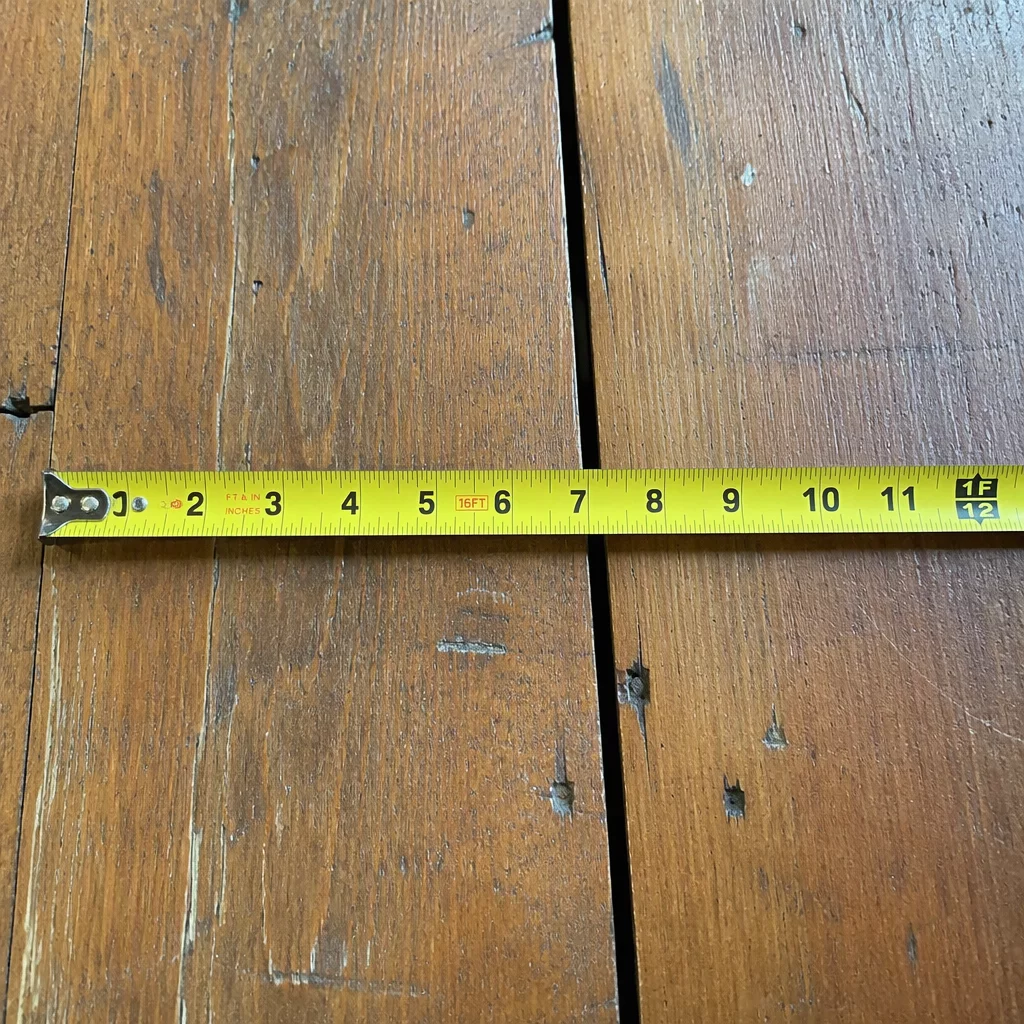
| Square footage | Room sketch dimensions | Layout diagram + context frame |
| Counts | Per-room inventory list | Tagged photos per counted item |