Key Takeaways
- Every scope statement must trace back to a physical observation and forward to an estimate line item.
- Record the boundary logic explicitly — the next reviewer cannot verify what was never written.
- Attach the evidence that would falsify the decision, not only the evidence that supports it.
The Hidden Second List
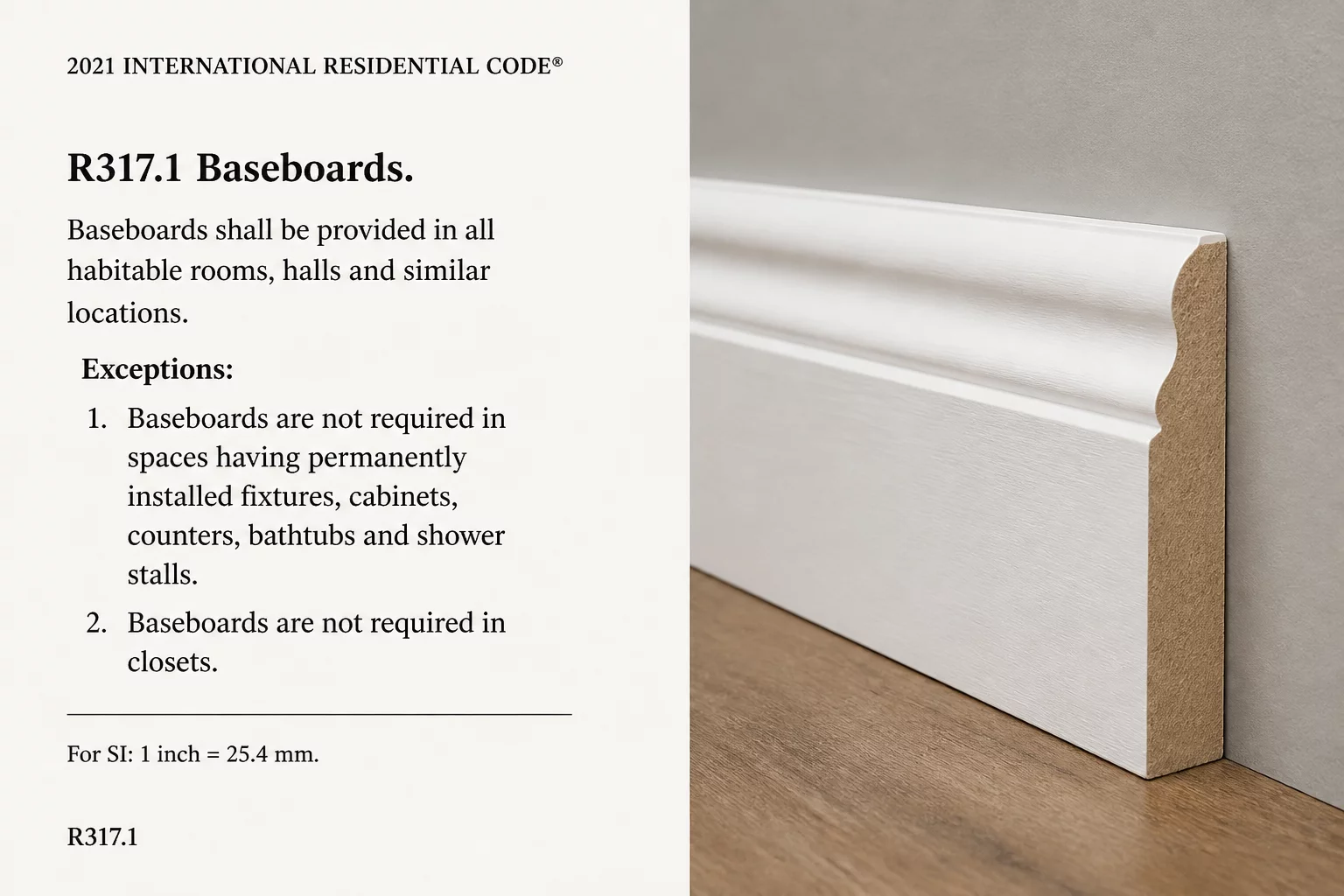
A scope line says 'remove and replace baseboard, 18 LF'. Does that include the shoe moulding? The caulk line? The paint touch-up on the wall above? Different reviewers read different answers into the same line, and none of them are wrong — the scope simply never said.
Assumed work is where scope disputes are born. The fix is not writing longer line items; it is adding a short explicit statement of what the scope does not cover, so the assumption becomes a documented decision.
Three Classes of Assumed Work
Paint, caulk, texture, and trim adjacent to the named item — routinely assumed, rarely stated.
Floor protection, furniture moving, containment — everyone assumes someone included it.
What happens if the opened wall reveals more damage — the assumption that silently inflates or caps a scope.
Stating the Exclusions
An exclusion note is one sentence per assumed area: 'Wall paint above chair rail not included', 'No allowance for subfloor repair beyond measured area'. These lines cost nothing to write and convert future arguments into simple scope checks.
The scope trace treats exclusions as first-class content — a scope that names its edges is reconstructable; a scope that leaves them implied is a coin flip.
The expensive part of a scope is usually the sentence that was never written.
Included vs Assumed Grid
| Scope Area | Typically Included | Typically Assumed |
|---|---|---|
| Baseboard run | Detach, replace, finish nail | Shoe moulding, caulk, paint blend |
| Drywall patch | Cut, hang, tape, texture | Prime beyond patch, corner bead match |
| Flooring section | Material and install to boundary | Underlayment, transition strips, thresholds |