Key Takeaways
- Every scope statement must trace back to a physical observation and forward to an estimate line item.
- Record the boundary logic explicitly — the next reviewer cannot verify what was never written.
- Attach the evidence that would falsify the decision, not only the evidence that supports it.
Why One Room Yields Three Scopes
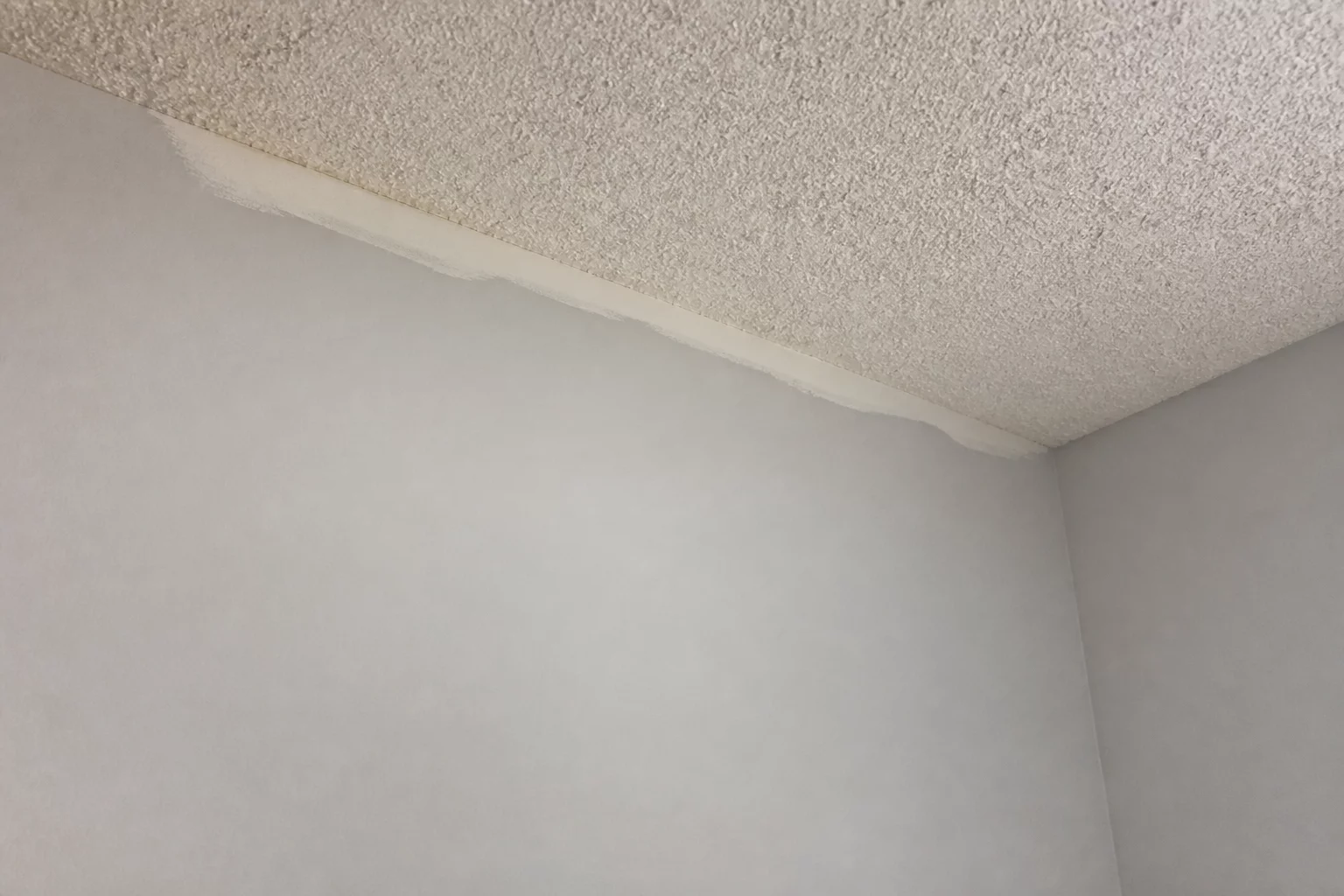
A scope boundary is a documented decision, not a physical fact. In a typical living room with a moisture line along one wall, the observable damage touches the baseboard, a section of drywall, and the floor finish near the perimeter. Each of those contact points offers a different place to stop the repair — and each stopping point produces a different, defensible scope.
The estimator's task is not to find the one 'true' boundary but to record which boundary was chosen and what physical evidence supports it. When that reasoning is documented, a second reviewer can reconstruct the decision. When it is not, the same room looks like three contradictory estimates.
The Three Boundary Anchors
Cut and patch limited to the metered moisture footprint — baseboard off, drywall opened to the dry line, finish matched locally. Smallest defensible scope; requires proof the damage truly stops there.
Repair extends to the nearest natural break: a corner, a doorway casing, or a material transition where a stop line is visible and reproducible in photos.
Finish operations extend to the whole wall plane or room side because a partial blend would be visibly discontinuous — defensible only when documented with comparison photos and sheen/texture notes.
Choosing Without Picking Winners
This guide does not argue which boundary is 'correct'. It shows how each boundary option changes included work, excluded work, and the evidence required to defend it. A damage-only boundary needs moisture maps. A full-plane boundary needs finish-match documentation and photos proving a blend is not feasible.
The scope trace stays honest when the fieldbook records the rejected options alongside the chosen one. A reviewer who sees the alternatives and the reason they were set aside rarely needs to reopen the file.
The scope is not the damage; the scope is the documented boundary decision attached to the damage.
Boundary Comparison Matrix
| Boundary Option | Evidence Required | Line-Item Consequence |
|---|---|---|
| Damage-Only | Moisture map, dry-line photo, meter readings | Localized cut & patch line items |
| Transition-Matched | Photo of transition point, layout sketch | Removal/detach items to the break line |
| Full-Plane | Finish-match photos, sheen comparison notes | Whole-wall or whole-side finish operations |